
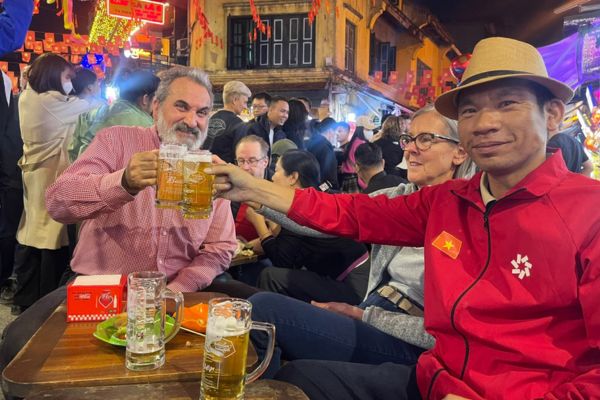
“If you are looking for white tablecloths, air conditioning, and whispering waiters, I have some bad news: You have come to the wrong city.
But if you are ready to sit elbow-to-elbow with strangers, inhale the perfume of grilled pork mixed with motorbike exhaust, and engage in the chaotic symphony of the sidewalk… then welcome. You are about to discover the real Hanoi Cuisine.
Here, eating is not a passive activity. It is a contact sport.
The best flavors in this thousand-year-old capital aren’t found in glass skyscrapers. They are hidden in the labyrinth of the Old Quarter, guarded by grandmothers who have been cooking the same broth since the war, and served exclusively on low plastic stools.
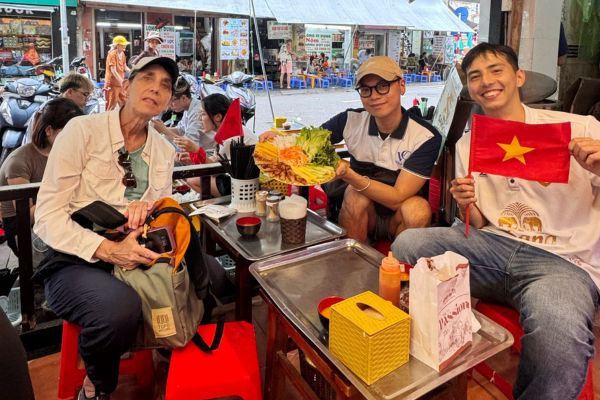
Why? Because in Hanoi, we believe that the closer you are to the ground, the higher the flavor.
Today, forget what you read in the Michelin Guide. I’m going to take you off the tourist map and show you how to eat like a true Hanoian: boldly, loudly, and with a deep respect for the perfect balance of salty, sweet, sour, and spicy.
Grab a stool. It’s time to dig in.”
Part 1: The Philosophy – Why We Don’t Just “Eat”
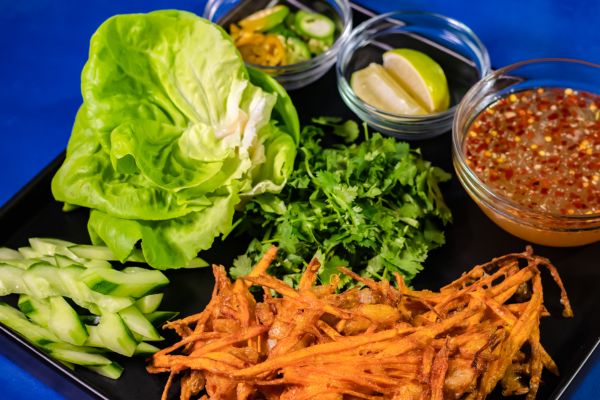
In the West, food is often served ready-to-eat. The chef decides the flavor, and you consume it. In Vietnam, the chef provides the foundation, but you are the architect.
Every table in Hanoi comes with a “laboratory” of condiments: garlic vinegar, chili oil, fresh limes, and fish sauce. And then there are the herbs – baskets of mint, coriander, perilla, and basil. These aren’t garnishes. They are medicine. They are texture. They are the Yin to the hot, salty Yang of the broth. Rule #1: Don’t be shy. Tear the herbs, squeeze the lime, dip the meat. In Hanoi, silence at the table is suspicious; slurping is the highest form of flattery.
Part 2: The Morning Ritual – Phở Bò (Beef Noodle Soup)
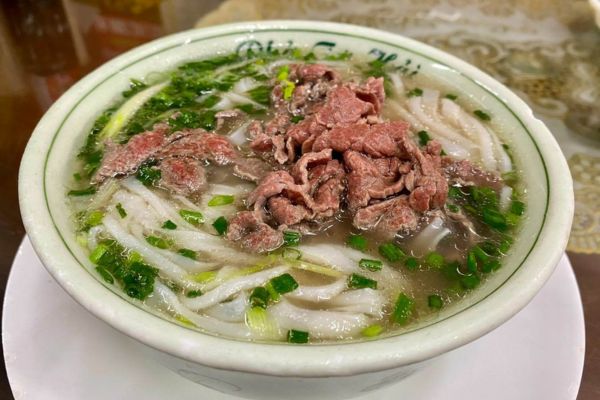
If Hanoi had a soundtrack, it would be the clinking of ceramic spoons against Phở bowls at 6:00 AM. Phở is not just soup; it is the morning prayer of the city.
The Secret: The magic isn’t in the noodles; it’s in the broth. Bones simmered for 12 to 24 hours with charred ginger, onions, star anise, and cinnamon. It should be clear, aromatic, and deeply savory.
Local Tip: Sip Before You Squeeze. Most travelers immediately drown their Phở in lime and Sriracha. Stop. Taste the pure broth first. Respect the chef’s hard work. Only then, add vinegar (better than lime for beef) and a few slices of fresh chili to wake up the fat.
Part 3: The Lunchtime Smoke Signal – Bún Chả
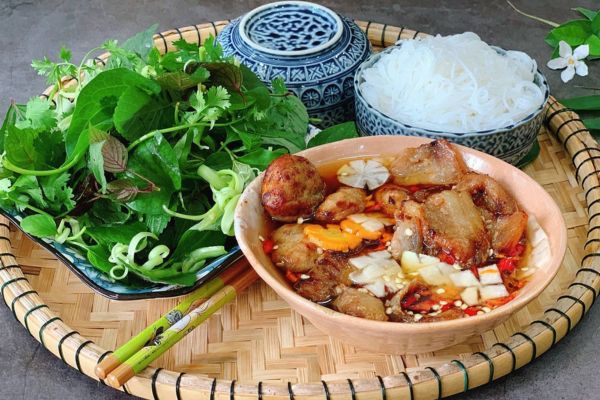
Around 11:30 AM, you will smell it before you see it. The thick, seductive scent of pork grilling over charcoal wafting through the streets. Follow that smoke, and it will lead you to Bún Chả.
This dish became world-famous when President Obama sat on a blue stool with Anthony Bourdain, but Hanoians have loved it for generations. It’s a dipping noodle dish consisting of:
-
The Dip: A bowl of warm, sweet-and-savory fish sauce with grilled pork belly and meatballs.
-
The Carb: Cold, white rice vermicelli.
-
The Green: A mountain of fresh herbs.
How to Eat It Like a Pro: Don’t dump everything into one bowl. Grab a small amount of noodles with your chopsticks, dip it fully into the sauce bowl along with a lettuce leaf, and eat it all in one bite with a piece of meat. It’s a play on temperature: cold noodles meeting warm meat.
Part 4: The Afternoon Crunch – Bánh Mì & Bánh Gối
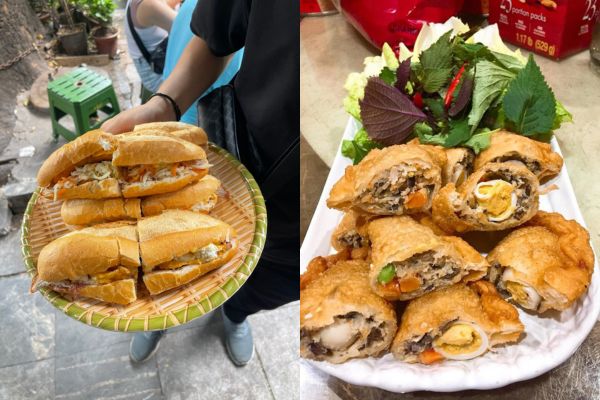
Hanoi is not a city for diet plans. In the afternoon, we snack.
Bánh Mì: You know it, but have you tried the Hanoi style? Unlike the veggie-heavy versions in the South, Hanoi Bánh Mì is simpler: liver pâté, butter, cold cuts, and a splash of chili sauce. It focuses on the richness of the meat and the crunch of the bread.
Bánh Gối (Pillow Cake): Think of it as a deep-fried Vietnamese empanada. Crispy skin outside, filled with minced pork, glass noodles, and wood ear mushrooms inside.
Local Tip: Never eat fried food alone. Always wrap it in a lettuce leaf and dip it in the sweet-sour sauce. The freshness of the leaf cuts through the oil – that is the balance we always talk about.
Part 5: The Sweet Ending – Cà Phê Trứng (Egg Coffee)
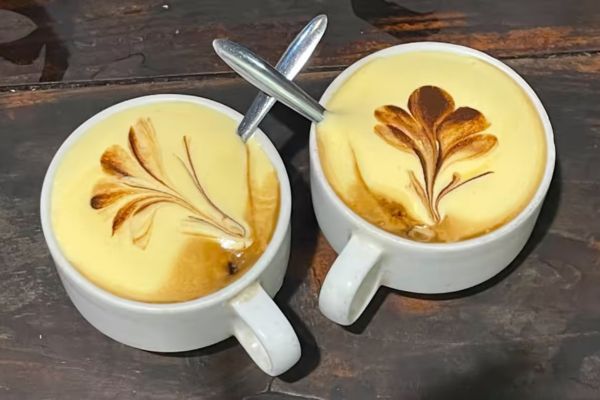
It sounds strange. It tastes like heaven. Born in the 1940s when milk was scarce, a clever bartender whisked egg yolks with sugar and condensed milk until it became a fluffy, creamy meringue, then poured it over strong robusta coffee.
It’s not really coffee; it’s Liquid Tiramisu. Rich, custardy, and bold. It is the perfect fuel to keep you exploring the Old Quarter for another few hours.
Conclusion: The Best Souvenir is a Memory
You can buy a conical hat or a lacquer painting, but the best thing you will take home from Hanoi is the memory of sitting on a tiny plastic stool, knees touching your chest, sweat on your brow, sharing a meal that cost $2 but tasted like a million.
So, put down the guidebook. Look for the busiest stall with the grumpiest-looking lady serving food. Sit down. Smile. And eat. Welcome to the real Hanoi.